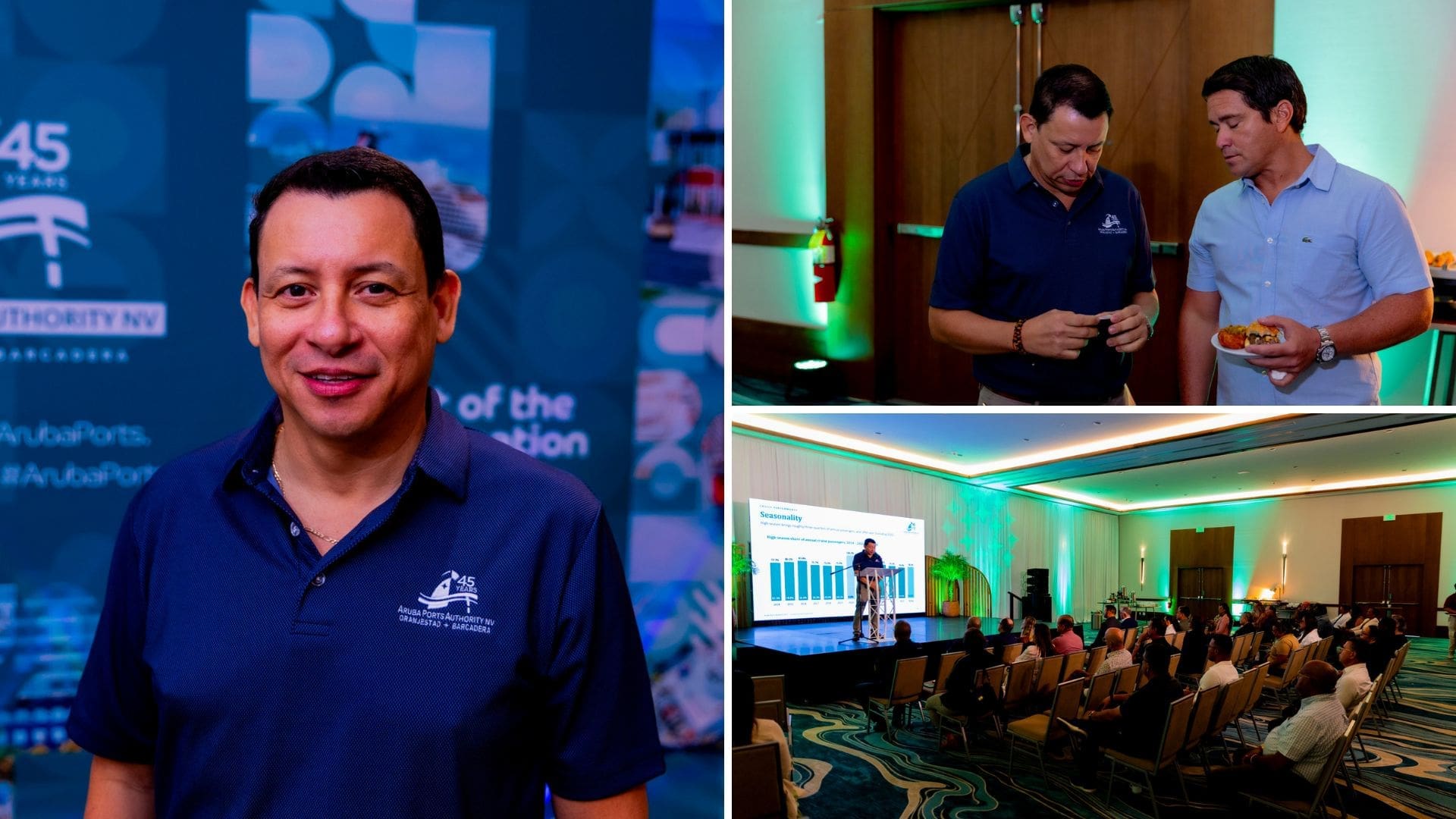
Aruba is on track to welcome more than one million cruise passengers in 2026, bringing new opportunities for local businesses and workers while also increasing the need for better harbor capacity planning and a more balanced distribution of ship visits. This was one of the main messages delivered by Marc Figaroa, Chief Executive Officer (CEO) of Aruba Ports Authority N.V. (APA), during Cruise Connect 2026.
For the event, APA welcomed two prominent international speakers: Donald Brown, Senior Vice President of Maritime Policy at Cruise Lines International Association (CLIA), and Adam Ceserano, president of the Florida-Caribbean Cruise Association (FCCA). Patrick Melchiors of the Aruba Tourism Authority also delivered a presentation.
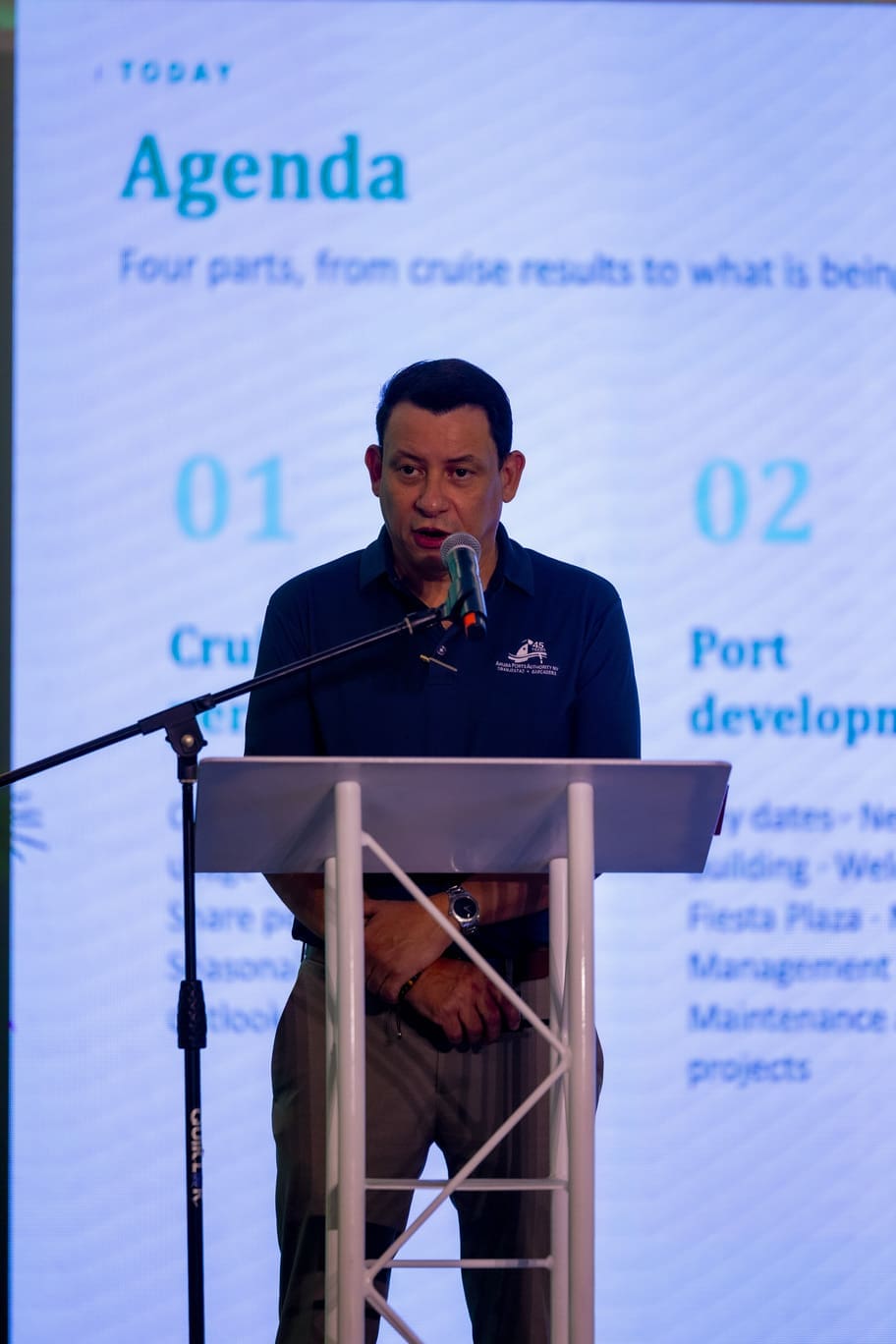
During his presentation, Figaroa outlined the latest cruise tourism figures, projections for 2027, and APA’s planned investments to improve the visitor experience. His presentation painted a picture of a destination that continues to enjoy strong demand from cruise lines, while facing growing pressure on its harbor facilities.
According to the projections presented, Aruba is expected to end 2026 with approximately 1,070,186 cruise passengers. This would mark the first time the island surpasses one million cruise passengers in a single year, representing an increase of approximately 28.7% compared with the 831,399 passengers recorded in 2019, before the pandemic.
For 2027, APA projects 1,071,530 passengers and 375 ship calls. These figures suggest that passenger numbers will remain close to the record level projected for 2026, with a slight increase of 0.1%.
Cruise season continues to shape business activity
For Aruba’s business community, these figures represent significant economic opportunities. Cruise ship visits generate activity for taxi drivers, tour operators, retailers, restaurants, and other businesses that serve visitors.
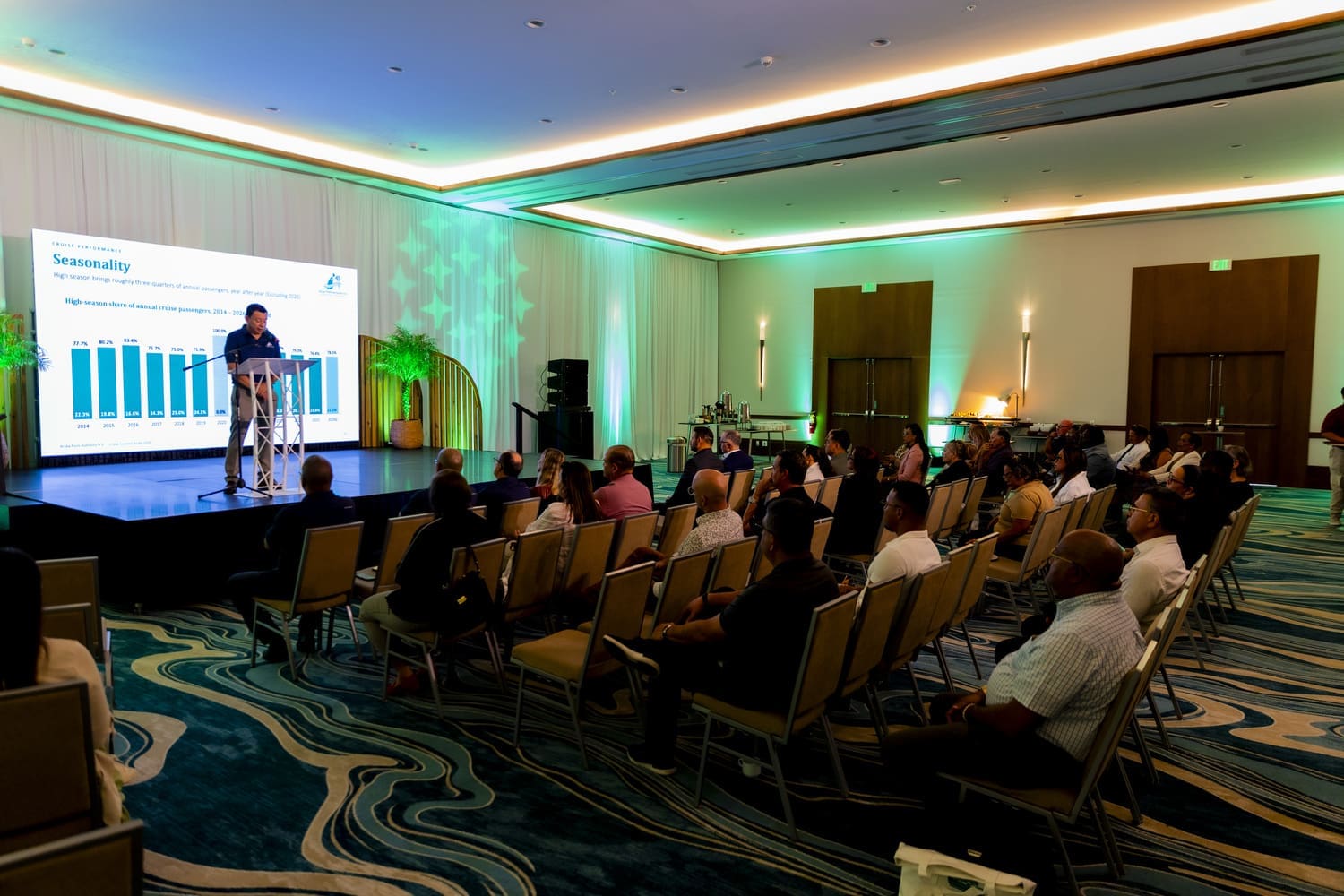
However, cruise tourism activity is not evenly distributed throughout the year. According to the presentation, approximately three-quarters of annual cruise passengers arrive during the peak season. This means businesses and service providers must be prepared for particularly busy days, while demand can be considerably lower during other months.
The 2025 figures illustrate this seasonal pattern. Cruise ships visited Aruba on 192 days that year, representing 52.6% of the calendar year. On 20 of those days, passenger numbers exceeded 10,000. These high-volume days accounted for only 10.4% of all cruise ship days.
For 2027, APA projects approximately 147,000 cruise passengers in December, compared with around 29,000 in July. This difference highlights the importance of aligning staffing, transportation, and other services with the cruise schedule.
Harbor faces growing pressure to accommodate demand
Another key point raised during the presentation was the increasing difficulty cruise lines face in securing berthing space at the harbor due to increasingly busy schedules. APA is working with cruise companies to distribute ship visits more effectively and make better use of available harbor capacity. This is essential to accommodate growing demand while maintaining service quality, particularly on the busiest days.
According to the figures presented, cruise ships stayed in Aruba for an average of approximately 11 hours and 32 minutes during October. This gives passengers time to explore the island and spend money in the local economy. Feedback from cruise lines suggests that Aruba could make better use of this time to encourage greater visitor spending on the island.
Preparations for larger ships and harbor improvements
To meet the industry’s needs, APA is carrying out several infrastructure and maintenance projects. Among the completed works is the installation of two new mooring bollards, each with a capacity of 150 tons. These installations are part of the preparations for the arrival of the Icon-class ship Legend of the Seas on November 18.
APA is also replacing the protective systems between ships and the harbor, known as fenders. Other projects include repairs and renovations to the terminal roof, the installation of temporary restroom facilities, and the addition of gazebos to provide shade throughout the harbor.
Plans for 2027 include a second temporary restroom facility, additional gazebos, and the replacement of the remaining fenders. APA also expects to receive a new pilot boat during the first quarter of 2027. The vessel will transport maritime pilots to ships so they can assist captains with navigating into and out of the harbor.
These improvements are intended to support smoother harbor operations and provide greater convenience for everyone using the facilities.
Welcome Plaza and Fiesta Plaza projects planned for 2027
Improving the visitor experience beyond the harbor is another priority for APA. Projects involving Welcome Plaza and Fiesta Plaza have been postponed until the second quarter of 2027. However, APA presented the design for a canopy or pergola at Welcome Plaza, which is intended to make the area more comfortable for visitors.
The goal is to improve the first impression cruise passengers and crew members have of downtown Oranjestad and enhance their overall experience in Aruba. The connection between the harbor and the city center is particularly important for local businesses, as thousands of visitors enter the city through this area before continuing to shops, restaurants, and other local attractions.
Figaroa also presented the design for APA’s new office building at the former Department of Public Works (DOW) location. The project is awaiting a building permit, with construction expected to begin in 2027.
In addition, a new digital harbor management system is expected to become fully operational by January 1, 2027. The system will make information about harbor schedules, ships in port, and cruise timetables available online. This will help businesses and others who depend on harbor activity plan their operations more effectively.

Aruba continues to receive positive evaluations
According to the feedback presented by Figaroa, Aruba continues to receive very positive evaluations from cruise lines, despite the challenges associated with the busy season. The island maintains its position as an important destination on ABC and Southern Caribbean itineraries. Cruise companies also value the cooperation between APA, the Aruba Tourism Authority, and the Ministry of Tourism.
The challenge for Aruba is to translate growing visitor numbers into tangible benefits for the local economy while maintaining a positive experience for passengers. Figaroa’s presentation highlighted what this requires: sufficient harbor capacity, well-maintained facilities, and close coordination with the cruise industry to make the most of the economic opportunities cruise tourism offers.