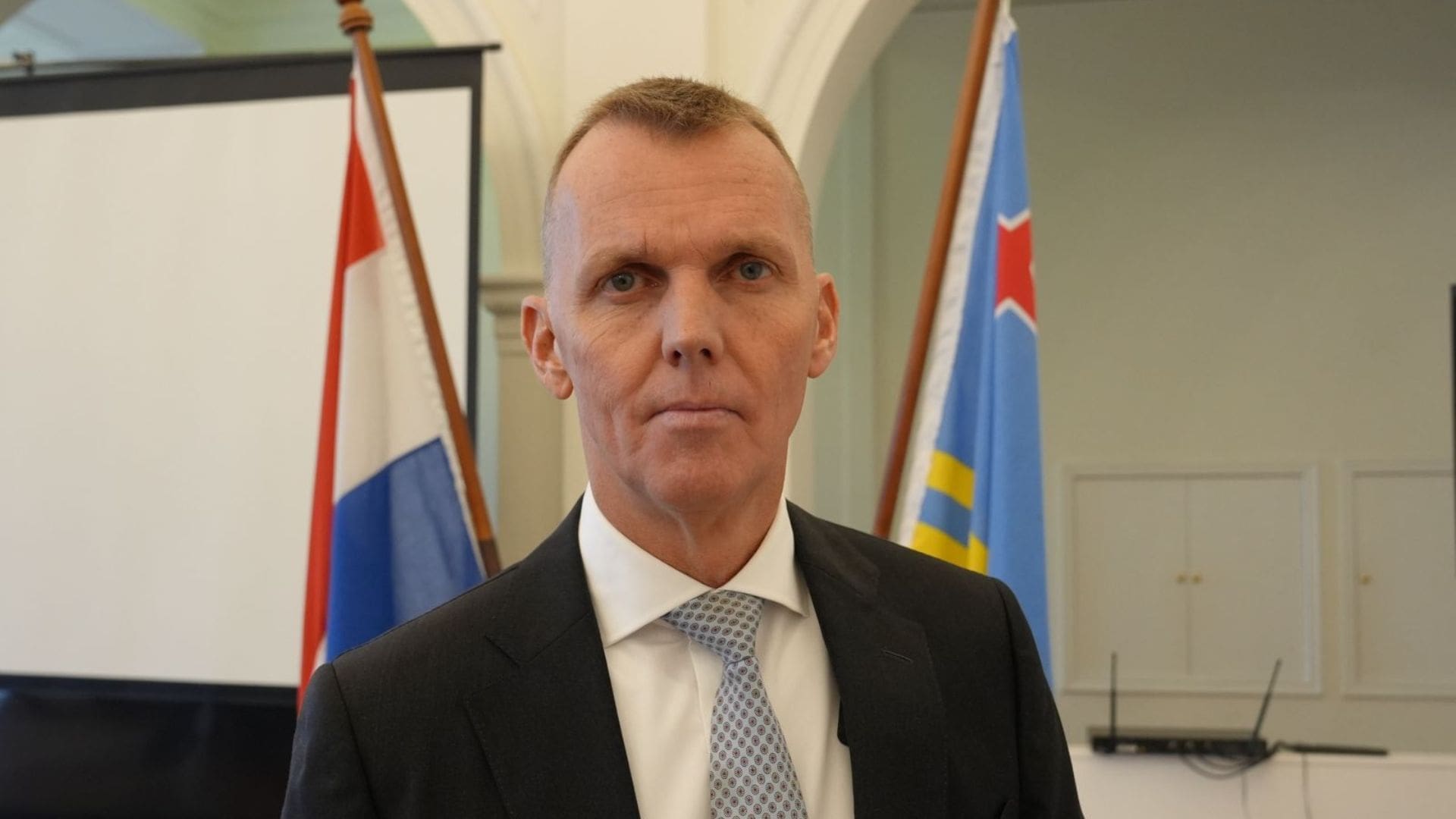
Dutch economist Koert van Buiren, Director of ‘Economisch Bureau Amsterdam’ (EBA), believes Aruba has the financial and economic capacity to raise its minimum wage. He argues that doing so would help reduce poverty and improve the purchasing power of the island’s lowest-paid workers.
Van Buiren has nearly 30 years of experience in economic research in the Netherlands and internationally. He studied economics at the University of Amsterdam and previously served as director of SEO Economic Research. In 2018, he founded Economisch Bureau Amsterdam, a research and advisory institute specializing in economic policy, including the challenges facing small island economies and the Dutch Caribbean.
Together with economist Martijn Mak, Van Buiren prepared the Koopkrachtplan Aruba (Aruba Purchasing Power Plan), commissioned by the Government of Aruba and presented to Minister of Finance, Economic Affairs and the Primary Sector Geoffrey Wever in October 2025.
The report outlines measures to reduce poverty and strengthen purchasing power. One of its key findings was that Aruba’s statutory minimum wage, including the reparatietoeslag (wage compensation allowance), covered only about 80% of the minimum income required for a person living alone to meet basic expenses.
To address this gap, the researchers recommended gradually increasing the minimum wage until it reaches the minimum cost-of-living threshold. This phased approach is now reflected in legislation under consideration.
According to Van Buiren, Aruba’s favorable economic conditions provide an opportunity to implement the proposed increases. He believes the country has sufficient economic and financial room to act, particularly given the number of workers who cannot cover their essential expenses with their current earnings.
Limited impact on inflation expected
One of the main concerns surrounding a minimum wage increase is its potential effect on consumer prices. However, Van Buiren believes a moderate increase would be unlikely to cause significant inflation.
He explained that prices in Aruba are largely influenced by the cost of imported goods, while labor expenses account for a relatively small share of the overall cost of the island’s tourism product.
The EBA report reaches a similar conclusion, suggesting that Aruba’s economic structure and heavy reliance on imports would limit the effect of a moderate wage increase on consumer prices.
Nevertheless, Van Buiren acknowledged that higher wages would increase operating costs for businesses. He therefore recommended considering compensation measures, particularly for companies that employ large numbers of minimum-wage workers.
Lessons from Bonaire
Van Buiren also drew on his experience researching minimum wage increases in Bonaire. That work helped inform the recommendations for Aruba, particularly regarding measures that could reduce the financial burden on employers.
The EBA study also incorporates international research, experiences from other countries, and an analysis of Aruba’s labor market and broader economic conditions.
Additional measures to support purchasing power
Although raising the minimum wage is a central recommendation, the Aruba Purchasing Power Plan proposes a broader approach to reducing poverty.
Other recommendations include increased financial support for pensioners, improvements to social assistance, rental subsidies, childcare assistance, and measures to ease utility costs.
The government has already introduced increases in financial support for pensioners and recipients of general social assistance. Additional measures include higher schoolchild allowances, assistance with back-to-school expenses, and increased benefits for people with disabilities.
Legislation aimed at providing financial support to families with children who have special needs is also being prepared for parliamentary consideration.
Van Buiren emphasized that the research revealed concerning levels of poverty in Aruba and that action is urgently needed. In his assessment, gradually raising the minimum wage is an essential part of addressing the problem.
The study was commissioned at the request of Prime Minister Mike Eman, Minister of Social Affairs Mervin Wyatt-Ras, and Minister of Finance and Economic Affairs Geoffrey Wever.
During the presentation of the book Volk van Veerkracht in The Hague, Prime Minister Eman and Van Buiren revisited the importance of increasing the minimum wage and discussed how the EBA report supports the case for reform.
Their discussion reinforced the report’s central conclusion: Aruba has an opportunity to improve the financial circumstances of its lowest-paid workers, but meaningful progress will require coordinated measures addressing both wages and the cost of living.