
Recent events have raised concerns about mental health care in Aruba and the role of Respaldo, the organization responsible for specialized mental health services. Respaldo says it understands the concerns being expressed by the public and wants to explain what happens behind the scenes.
The organization deals with people experiencing serious mental health problems every day. According to Milouschka Boekhoudt, Respaldo’s Manager of Care, the people working there want nothing more than to see their clients receive the help and support they need.
At the same time, Respaldo says its role is only one part of a much larger system. Many of the challenges the organization faces are connected to problems that go beyond Respaldo itself and require cooperation between different parts of the healthcare and social support systems.
“We are missing the aftercare,” Boekhoudt said.
Respaldo currently has around 2,132 active clients, while approximately 500 people receive support at home from professionals such as social workers and nurses. The organization provides services for adults, children and young people and works with family doctors, Social Affairs, FCCA and other organizations.
But the demand continues to grow, while the resources available to meet it remain limited.
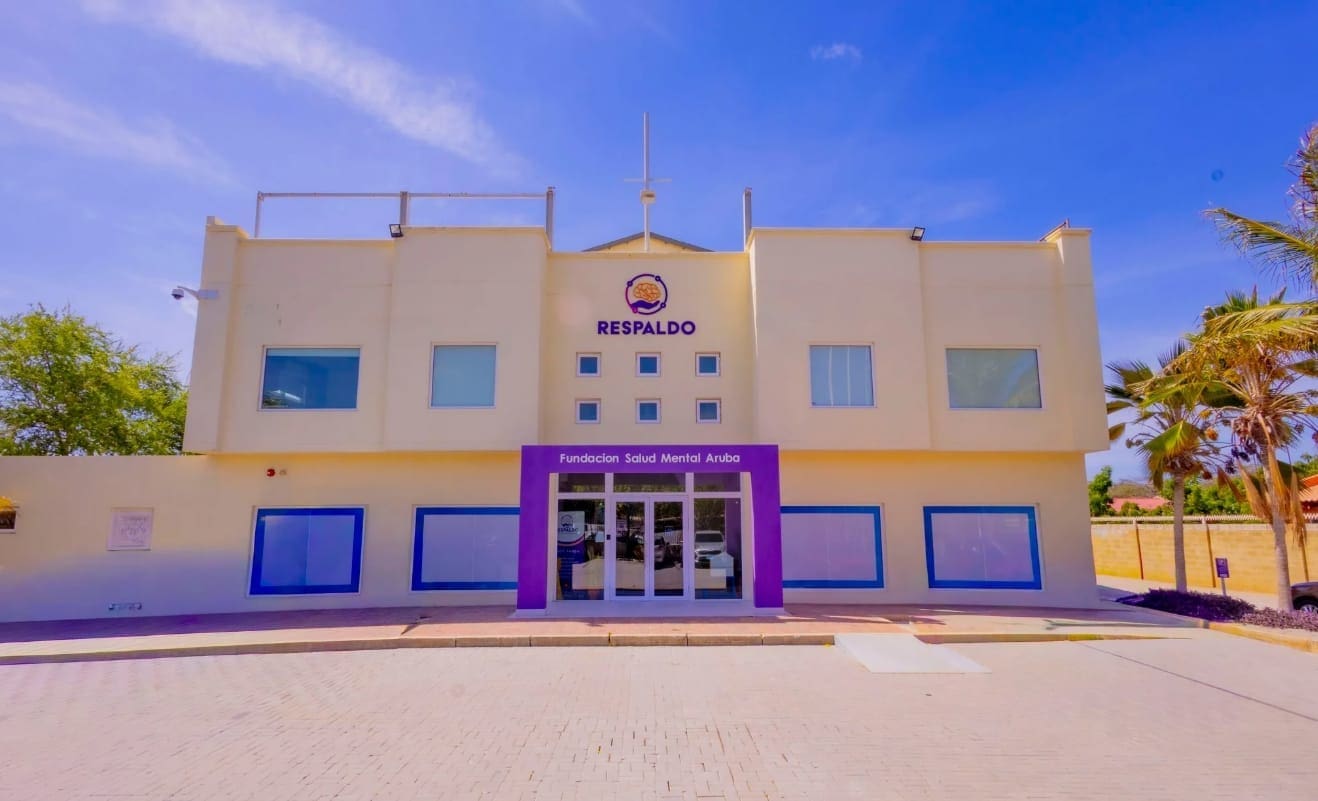
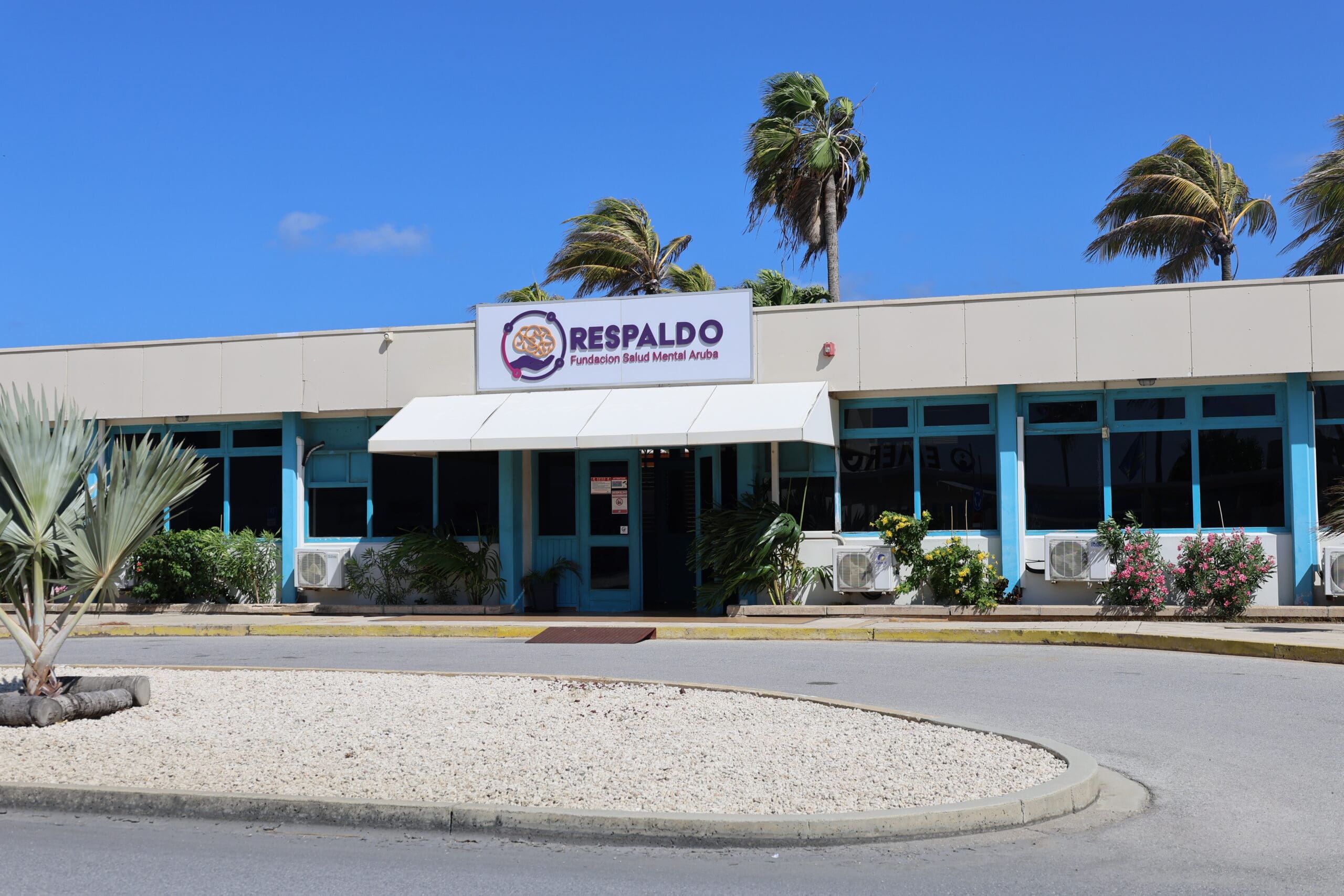
Like many organizations in Aruba and across the Caribbean, Respaldo is dealing with a shortage of specialized staff and limited space. Its acute inpatient unit operates from the former PAAZ unit at Dr. Horacio E. Oduber Hospital, a building that is nearly 40 years old and rented by Respaldo.
The unit has nine beds and two isolation rooms for people experiencing severe psychiatric problems, including psychosis or aggressive behavior. These rooms are important because they allow patients to receive treatment in a controlled and safe environment while protecting the patients themselves, other patients and staff.
But there are limits to how many people Respaldo can admit.
If both isolation rooms are occupied and the patients inside are not stable enough to move to the general ward, those beds cannot be used for new admissions.
“If our isolation rooms are full, we cannot admit another client,” Boekhoudt said.
The lack of space is only one part of the problem. Respaldo also has a waiting list, and new referrals continue to come in while existing clients are receiving treatment.
Because Respaldo provides specialized care, not everyone who is referred to the organization necessarily needs treatment at that level. Each case must be assessed, and some people may be referred back to primary care. In other cases, the assessment confirms that specialized treatment at Respaldo is necessary.
This means the organization has to balance the needs of people already receiving care with those who are waiting to be assessed or admitted.
But there is another problem that makes the situation even more complicated: many people who need mental health care are also struggling with addiction.
A person may be dealing with a psychiatric disorder while also using drugs, alcohol or both. When that person reaches Respaldo during a crisis, the immediate goal is to stabilize them.
For example, someone experiencing psychosis linked to substance use may receive psychiatric treatment and become stable enough to leave the acute unit after a few weeks.
But stabilization is not the same as recovery.
Once the person leaves Respaldo, the next question is where they go and what support is available to them.
A person may enter one of the few places where voluntary treatment or support is available. However, these services are not regulated in the same way as specialized mental health treatment, and people are free to leave when they choose.
According to Boekhoudt, a person may stay for a week or two and then leave. If they return to the same environment and begin using drugs or alcohol again, the problems that contributed to the original crisis can quickly return.
The person may then become unstable again and eventually end up back at Respaldo.
This creates a difficult cycle: a patient is admitted, stabilized, discharged and returns to the community, only to experience another crisis because the underlying problems have not been fully addressed.
“If the person does not receive the appropriate help after being discharged, they will fall back into the same situation,” Boekhoudt said.
For Respaldo, this is one of the biggest gaps in the current system. There is no clear, continuous pathway where people struggling with both mental health problems and addiction can receive long-term support and guidance after leaving acute psychiatric care.
The problem does not affect Respaldo alone. Families can become overwhelmed and may eventually turn to the organization as a last resort. Police, social services, doctors and other organizations can also become involved when someone repeatedly falls into crisis.
By the time a person reaches Respaldo during an acute crisis, the problems may have been developing for months or even years.
This raises a bigger question about how Aruba’s mental health system can intervene earlier and, just as importantly, how it can continue supporting someone after the immediate crisis has passed.
The issue of mandatory treatment is also part of that discussion. Boekhoudt says Respaldo cannot simply decide to force someone to continue treatment. If the government wants to require someone to receive treatment, the person’s legal rights become an important consideration.
“When you make something mandatory, you are dealing with the person’s rights,” she said.
Questions about guardianship, legal decisions and the balance between an individual’s rights and the need to protect that person and others require a broader discussion involving government and other sectors, not healthcare alone.
Respaldo is part of the GGZ steering committee, where different organizations come together to discuss mental health care. For Boekhoudt, one of the challenges is making sure that these organizations do not work separately, with each institution responsible only for its own part of the problem.
The organization also provides services beyond acute psychiatric care. At its Mahuma location, children and young people with mental health problems receive appointments and treatment without being admitted to stay overnight. Respaldo also works with other organizations to support clients as they return to their communities.
The organization has a service for mothers experiencing mental health problems during pregnancy as well. According to Boekhoudt, these cases are addressed immediately and are not placed on a waiting list.
Still, the growing number of clients and the shortage of available resources continue to put pressure on the system.
There is an initiative to build a new facility for Respaldo, with support from Fundacion Mama Tisa. The proposed building could provide more space, but Respaldo says the solution cannot simply be about adding beds.
The bigger issue is how Aruba organizes mental health care as a whole and how the different services connect with one another.
With a growing population, more people seeking treatment and increasing demand for specialized services, Respaldo is facing more pressure at every stage of care.