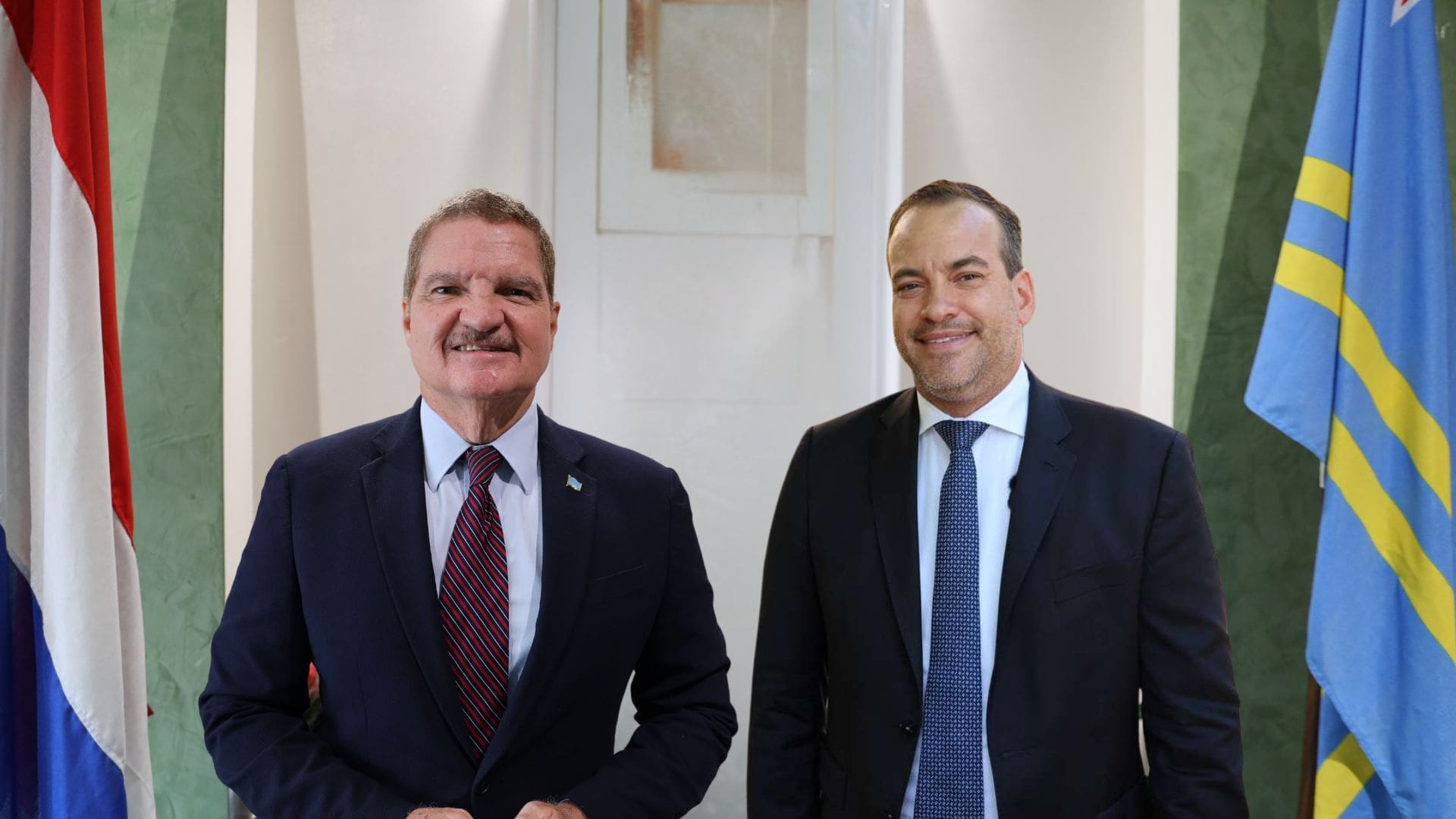
Despite efforts to downplay their differences, tensions between coalition partners AVP and FUTURO appear to be growing over the proposed increase of Aruba’s minimum wage to the subsistence level.
Prime Minister Mike Eman has made it clear that he wants the government to move forward with the increase, arguing that all the necessary information is already available. However, Minister of Finance and Economic Affairs Geoffrey Wever continues to emphasize the need for further calculations before a decision can be made.
Speaking from the Netherlands on Thursday, Eman expressed frustration with his coalition partners during an interview with 24ora.com. He strongly rejected claims that additional research or financial data are needed to proceed with the proposed increase.
“It is completely unacceptable… to say that more figures are still needed,” says Eman. “Continuing to delay the matter with excuses about missing figures and calculations is simply not true. All the figures have been presented, and colleagues Wever and Cicilia have met…” he stated.
Wever, meanwhile, has taken a more cautious approach. In recent comments, the minister appeared increasingly frustrated with the ongoing debate but maintained that the government is not yet in a position to announce when a decision will be made.
“We are still carrying out different calculations,” Wever explained.
The disagreement has also raised questions about Eman’s political motivations. Some observers believe his determination to raise the minimum wage to the subsistence level is an attempt to secure a lasting political achievement before soon leaving office.
The prime minister firmly rejected that interpretation. “That is not the case,” Eman said.
The contrasting positions highlight a growing divide within the coalition. While Wever stresses the importance of making a financially responsible decision, Eman maintains that moving forward with the increase does not mean the government is acting hastily.
In Parliament, coalition representatives have attempted to minimize the disagreement, insisting that there is no serious conflict between AVP and FUTURO. They describe the situation as a difference of opinion, something they consider normal within a coalition government.
However, there are indications that the tensions may be more serious than coalition members are willing to acknowledge publicly.
According to reports, discussions behind closed doors have become increasingly heated, with some individuals allegedly going as far as to suggest allowing the government to collapse.
These reported remarks have raised concerns about the stability of the coalition, particularly as the two parties struggle to reach a common position on an issue that directly affects workers and households across Aruba.
For now, it remains unclear whether AVP and FUTURO will be able to bridge their differences and agree on a timeline for the proposed minimum wage increase.
The coming days could prove important for the future of the coalition. Prime Minister Mike Eman is expected to return to Aruba from the Netherlands on Sunday, November 1, when attention will likely turn to whether the coalition partners can find common ground or whether their disagreements will deepen further.